Saving Lives, One Child at a Time

Touching Tiny Lives works to mitigate the effects of HIV/AIDS on the most vulnerable infants and children under five by supporting their health, nutritional, developmental and emotional needs while empowering extended families and others who care for these children to provide a better future for them.
 
  • 1
  • 2
  • 3
  • 4
  • 5
  •  
 
  • slider_comp
  • slider_img_ttl_staff
  • slider_img_safehouse
  • slider_img_get_involved
  • slider_img_mokhotlong
 

a little time

rachel.pell
Uncategorized
 
May
16
Ideally, TTL aims to have children in the safe-home for an average of 3-months, hoping this is enough time for them to recover and return to their families. Obviously some children face challenges or difficult home situations that require a longer stay in the safe-home.  But when a child can successfully return home within three months it’s a double success. If a child can be reunited, it means they’re out of the danger zone. It’s time for the family to resume care with the important added support of TTL’s Outreach workers. It’s this model that supports long-term health for vulnerable children.
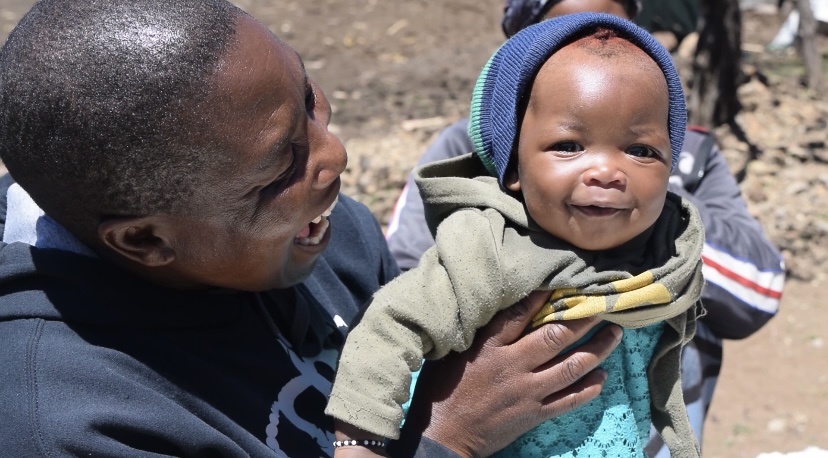
Last Friday, one of TTL’s safe-home babies was able to return home. Ntsoareleng spent two months in the safe-home recovering from severe malnutrition. She is a real sweet heart and I already miss her smiling face.


When Ntsoareleng first arrived at TTL it was hard to get her to finish a meal. Give her a piece of bread and she would take a few bites and try to hide the rest. Even children understand food insecurity. When you’re not sure when you’re next meal will come, it makes sense to try to make it last. Luckily within a week, Ntsoareleng started to understand that five meals would consistently come every day.
She soon recovered her strength and started walking again. It’s thrilling watching a child walk after a period of weakness and immobility. Unlike toddlers taking their first steps, there’s no hesitation. Once they feel like they can manage weight on their legs again, they’re off and running.
Captured in photographs her two-month recovery is incredible. In reality, it’s the result of some food, a lot of love, and a little time.

Arriving at the safe-home late March 2012, age 20 months
Safe-home departure: May 2012

Continue reading →


A Mother’s Strength

rachel.pell
Uncategorized
 
May
10
Each day here, we witness the immense strength children exude.

Although ever-present, we rarely comment on the figures of profound strength standing behind these little ones.

Mothers.

Grandmothers.

The bo’me who look after the safe-home babies each day.

It is with deep conviction and courage that these women care for the children in their lives.

Like mothers around the world, these women invest more of themselves in the children they love than can be comprehended and expressed in words.

The strength of women in this country…the women who love and care for the children of Lesotho…is something to be recognized.

With the impending arrival of Mother’s Day (in the US and Canada, at least), I think it is only fair that we acknowledge this important pillar in the work we do.

Without these women…without their strength, courage, and love, Touching Tiny Lives could not do what we do.
Retselisitsoe and his grandmother.
Reflecting on motherhood in a country like Lesotho brings up a myriad of subjects: maternal mortality, infant mortality, HIV/AIDS, malnutrition, the orphan crisis.

The intricacies of these issues certainly cannot be dissected in one short blog post, but the mere mention may serve to illuminate the challenges women and mothers face here.

Grandmothers find the strength and resolve to parent infants and toddlers upon the devastating loss of their own children to AIDS.
Mothers cradle newborns on their backs while threshing the wheat needed to keep their family alive.

Young sisters shoulder the responsibility of motherhood when they are the last in their family with the strength to do so.

Each day, mothers, grandmothers, aunties, and sisters stand strong and carry on with the duties of motherhood…pushing these seemingly insurmountable hurdles aside…raising beautiful, strong African children. 


And for that we say thank you and happy Mother’s Day!
Ntsoareleng and Me’ Mamosa, the safe-home coordinator.

Continue reading →


helping hand from the hospital

rachel.pell
Uncategorized
 
May
02
A guest post from one of TTL’s current volunteers, Kat Stott…
————
In a previous post, Julie described the immense challenges faced by the people of Lesotho in terms of the scale of this devastating HIV epidemic, compounded by alarmingly low numbers of healthcare professionals per population and often seemingly impossible access to care.

I thought I’d add a bit of detail about the reality of the conditions at Mokhotlong District Hospital for patients and staff, and the commendable way in which that reality is addressed in order to provide the best possible care for residents of the district, including the children at TTL.

I’m a doctor from the UK and am really grateful to TTL for the opportunity to volunteer with them for a while here in Mokhotlong. I’ve been dividing my time between TTL and the hospital, both of which experiences have been eye-opening and educational. 

The hospital is staffed by five doctors from the Democratic Republic of Congo. It provides medical care for anyone who makes it to the front door – be their needs medical, surgical, obstetric, pediatric, psychological or traumatic. The outpatient department is a small building, housing four consultation rooms and a waiting room full of patients that overflow onto the driveway from around 8am each day, until everyone has been seen. The inpatient wards are basic but provide safety and relative comfort during patients’ stay. There are two operating rooms, and one room that constitutes the emergency room – this is sufficient because most emergency cases are unable to make it to the hospital to seek urgent care. The doctors work a rotational on-call system, which entails taking turns to be the emergency doctor for all hospital departments including the labour ward, operating rooms and casualty, for seven days in a row, 24 hours per day. This makes my work schedule from the UK seem like a breeze – I work a maximum of four nights on-call in a row, sleep during the day after each shift, and am only on-call for one department or specialty at any one time.

Even basic resources at the hospital are scarce, with no hot running water, overused bedclothes often with large holes in them, and staff shortages across all professions. This week has been a particularly difficult one, with the xray machine- the only imaging modality in the hospital- out of order, and two very commonly required medications now out of stock in the entire country.

The nature of illness encountered here is very different to that which I have seen in the UK, mainly in terms of the burden of HIV and TB, and also the late stage at which patients present to services. This is due to a number of factors, some of which are mentioned above; in addition there is generally a relatively limited level of health awareness, reluctance to seek care due to financial implications in terms of direct cost of services and opportunity costs, and often cultural barriers to health-seeking behavior.

Despite these challenges, the hospital staff work without complaint to provide the best service they can for the many patients in need.  Emphasis is placed not only on the management of illness in its acute phase, but also on health education and follow-up to ensure clinical improvement. For the children here at TTL, the hospital offers a safety net and a vital role in their treatment and development. I hope the admirable attitude of the doctors, nurses and other staff there is maintained and that the relationship between the hospital and TTL continues to strengthen, to promote the best possible care for Mokhotlong’s vulnerable children for years to come. 


-Kat
The Mokhotlong Government Hospital
Construction at the hospital in the TB ward
One of TTL’s babies, Tsepang, admitted at hospital for a high fever
Tsepang back in the safe-home and on the road to recovery

Continue reading →